As night falls, the city remains awake. Countless lights gradually illuminate, outlining the contours of buildings and tracing the veins of streets, transforming the darkness into a different kind of daylight. This is not a natural miracle, but a masterpiece carefully crafted by lighting engineers. Lighting engineering, this modern alchemy that merges technology and art, is quietly transforming our relationship with the night. From functional illumination to emotional expression, from a single light source to intelligent systems, lighting has evolved beyond being a mere expeller of darkness. It has become a magician, shaping the character of the city and narrating the stories of space.
Tracing the history of the relationship between humans and lighting is a history of civilization's evolution. In the era of bonfires, light signified safety and gathering; during the oil lamp period, light delineated the boundaries between work and rest; Edison's tungsten filament bulb completely redefined humanity's concept of time. Today, the emergence of LED technology and intelligent control systems has ushered lighting engineering into an unprecedented creative phase. At the Berlin Light Festival in Germany, artists use light to transform historical buildings into canvases; the "Light Corridor" in Nagasaki, Japan, attracts millions of tourists every year; and the light show on the Bund in Shanghai showcases the modern charm of an Eastern metropolis. Behind these phenomena lies the magnificent transformation of lighting engineering from a practical technology to spatial art.
The technological dimension of contemporary lighting engineering is truly breathtaking. The high efficiency and long lifespan of LED technology have fundamentally changed the industry's economic model, while Internet of Things (IoT) technology has transformed every light into a network node. In Eindhoven, the Netherlands, the intelligent streetlight system developed by Philips automatically adjusts brightness based on pedestrian and vehicle traffic. The light show at the Burj Khalifa in Dubai is composed of millions of independently controllable LED light sources, achieving millisecond-level precision. What deserves more attention is the integration of sustainable concepts—solar-powered streetlights, biodegradable material lamps, light pollution control technology, etc. These innovations enable modern lighting engineering to shoulder ecological responsibility while creating beauty. This balance between technology and humanity is precisely what makes lighting engineering so fascinating.
When light meets architecture, the static space acquires a flowing expression. The Guggenheim Museum Bilbao designed by Frank Gehry, with its titanium metal surface, resembles liquid metal under the light; Tadao Ando's "Church of the Light" creates a sacred experience through its cross-shaped light slits. The collaboration between lighting engineers and architects yields an effect where 1+1>2. In China, during the Wuzhen Theater Festival, the ancient Jiangnan water town architecture shines with a contemporary artistic aura under the embellishment of lights; the "Xiao Man Yao" (or "Slim Waist") of Guangzhou Tower showcases the city's vitality through color-changing LEDs. These cases demonstrate that excellent lighting design is not an accessory of architecture, but an important component of spatial narrative. It can make stones sing and steel dance.
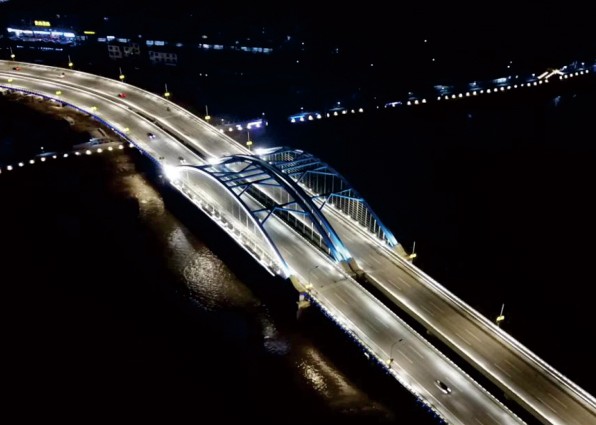
The magical power of lighting engineering lies in its ability to shape collective memory. The twinkling lights of the Eiffel Tower in Paris have become a symbol of romance; the neon sea of Times Square in New York symbolizes the hustle and bustle and opportunities of the city; the lighting of the Christ the Redeemer statue in Rio de Janeiro conveys hope and faith. These lighting landmarks are not only tourist attractions, but also become spiritual symbols of the city. Research shows that 70% of people's nighttime impression of a city comes from the lighting environment. London's "Lighting Strategy" launched in 2018 clearly states that it aims to enhance citizens' sense of belonging and pride through lighting engineering. When a Beijing resident introduces the red lights of the "Bird's Nest" to a friend, what he shares is not only a visual phenomenon, but also an emotional connection.
The future of lighting engineering is evolving towards greater intelligence and interactivity. Augmented Reality (AR) technology will enable pedestrians to interact with street lights using their mobile phones; biometric lighting can adjust color temperature based on human emotions; and Optical Communication Technology (Li-Fi) may turn every light into a data transmission station. However, amidst this technological frenzy, we should not forget the essence of lighting engineering—to serve people. A municipal government once shut down some overly decorated landscape lights due to complaints from citizens, a reminder that good lighting design is not about dazzling the eyes but understanding the hearts of people. It should respect the tranquility of the night, comprehend human needs, and balance beauty and functionality.
Lighting engineers are the light and shadow poets of modern society. They use light and electricity instead of ink, using the city as a blank canvas to write the nocturne of our era. When we share photos of lighting art exhibitions on Instagram or meet our lovers on a square adorned with lights, we are not only consumers of light, but also participants in this narrative of light and shadow. Perhaps, the indicator of a city's civilization should not only be its prosperity during the day, but also the quality of its nighttime lighting - it can illuminate the path, warm the soul, showcase technology, and inherit culture. In this alchemy of light, each of us is a witness and a co-creator.
The above content is sourced from the internet. If it infringes upon your rights, please contact us for removal!