I. Overview of lighting engineering
Lighting Engineering is an engineering technology that integrates multiple disciplines such as optics, electrical engineering, architecture, environmental psychology, and aesthetics. Its aim is to achieve efficient, comfortable, and energy-saving lighting effects through scientific light environment design. Lighting Engineering is widely applied in various fields such as architecture, roads, landscapes, stages, and industry, directly impacting human productivity, quality of life, and energy consumption.
1. Development history of lighting engineering
Traditional lighting era: dominated by incandescent lamps and fluorescent lamps, with low energy efficiency and short lifespan.
Efficient lighting era: Gas discharge lamps such as high-pressure sodium lamps and metal halide lamps are widely used.
LED Lighting Revolution: Since the 21st century, LED (Light Emitting Diode) technology has developed rapidly and become a mainstream lighting solution.
The era of smart lighting: Internet of Things (IoT) and Artificial Intelligence (AI) technologies empower lighting systems, enabling functions such as adaptive dimming and remote control.
II. Core Technologies of Lighting Engineering
1. Light source technology
(1) Traditional light source
Incandescent lamp: emits light through thermal radiation, with low luminous efficiency (10-15 lm/W) and short lifespan (about 1000 hours).
Fluorescent lamp: Gas discharge excites the phosphor to emit light, with high luminous efficiency (60-100 lm/W), but it contains mercury pollution.
High-pressure sodium lamp (HPS): suitable for road lighting, with high luminous efficiency (80-140 lm/W), but poor color rendering (Ra ≈ 20-30).
(2) LED light source
Advantage:
High luminous efficiency (100-200 lm/W, up to 300 lm/W or more in the laboratory)
Long lifespan (30,000-50,000 hours)
Adjustable light and color (RGB LED can achieve full-color changes)
Environmental protection (mercury-free, low UV radiation)
Key technologies:
Chip technology: Gallium Nitride (GaN)-based LED
Packaging technology: COB (Chip on Board), SMD (Surface Mount Device)
Thermal management: A key factor affecting LED lifespan
(3) Emerging light sources
OLED (Organic Light Emitting Diode): surface light source, flexible and bendable, suitable for decorative lighting.
Laser lighting: high brightness, used in special scenarios such as car headlights and projectors.
2. Optical design
Light distribution curve: describes the light intensity distribution of a light source, affecting the uniformity of illumination.
Reflector and lens design:
Reflective cup (for condensation)
Fresnel lens (for uniform diffusion)
Freeform optics (optimized light distribution)
Glare control: The use of shading angle design, diffuse reflective materials, etc. reduces discomfort glare (UGR<19).
3. Intelligent lighting control
Dimming technology:
PWM (Pulse Width Modulation)
0-10V dimming
DALI (Digital Addressable Lighting Interface)
Intelligent control system:
Sensor linkage: Light sensor and human infrared sensor (PIR) enable automatic switching.
IoT lighting: It supports networking through Wi-Fi, Zigbee, and Bluetooth Mesh, and supports mobile APP/voice control.
Adaptive lighting: Automatically adjusts brightness and color temperature based on ambient light, time, and user preferences.
4. Energy efficiency and green lighting
Luminous efficacy (lm/W): a measure of the energy conversion efficiency of a light source.
Lighting Power Density (LPD): The lighting power per unit area (W/m²), which must comply with the "Standard for Lighting Design of Buildings" (GB 50034).
Energy-saving measures:
Adopting high-efficiency LED light source
Rational utilization of natural light (daylighting design)
Intelligent control reduces ineffective lighting
III. Application Fields of Lighting Engineering
1. Architectural lighting
Indoor lighting:
Office lighting (uniform, anti-glare)
Commercial lighting (key lighting, atmosphere creation)
Home lighting (comfortable, dimmable)
Outdoor lighting:
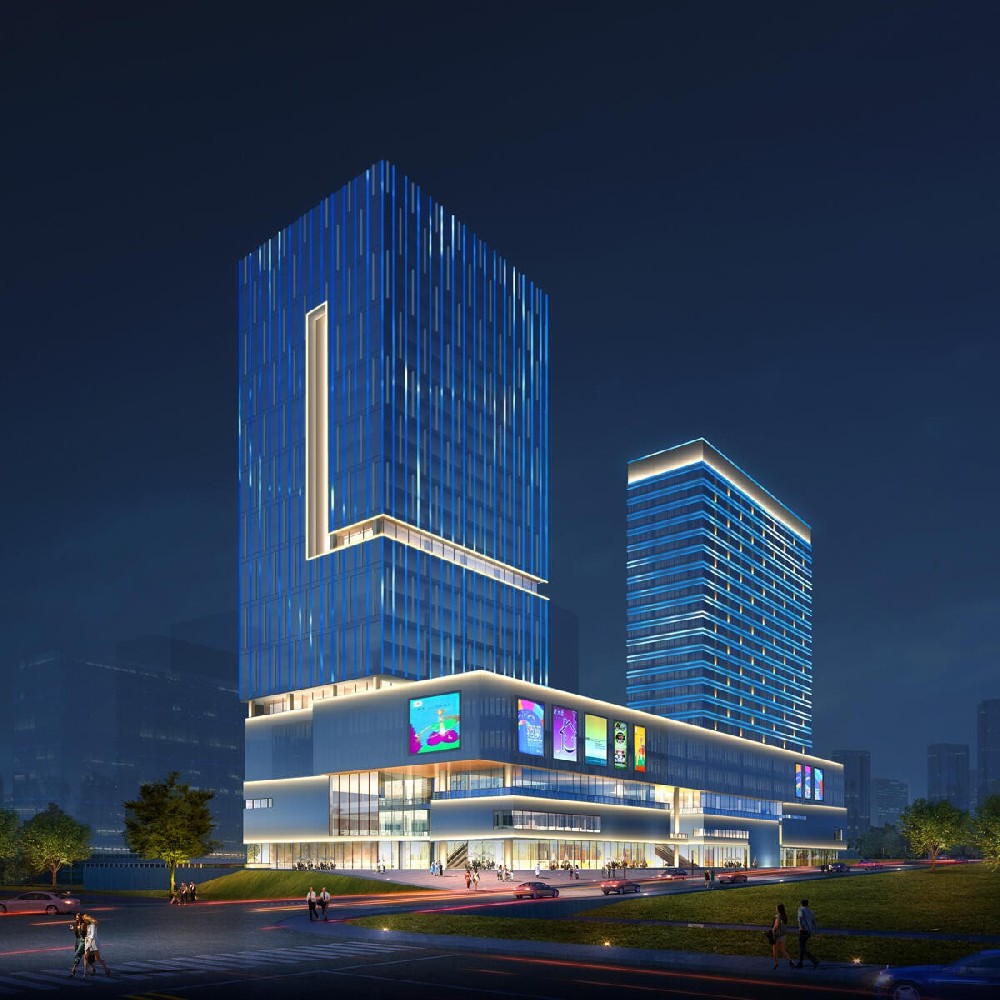
Building facade lighting (spotlighting, contour lighting)
Landscape lighting (courtyard lights, underground lights)
2. Road and urban lighting
Road lighting standards:
Main road: average illuminance of 20-30 lx, uniformity >0.4
Secondary main road: 10-15 lx
Smart street lights:
Integrates functions such as LED lighting, environmental monitoring, security surveillance, and 5G base station.
3. Industrial lighting
Factory high-bay lights (high luminous efficiency, long lifespan)
Explosion-proof lighting (for hazardous environments such as petroleum and chemical industries)
Shadowless lamp (medical, precision manufacturing)
4. Stage and film lighting
Spotlight, follow spot
RGB LED tinting light
DMX512 lighting control system
IV. Lighting Design Process
Requirements analysis: Determine the lighting purpose and standards (such as illumination and color temperature requirements).
Optical computing:
Utilize software such as Dialux and AGi32 for illuminance simulation.
Calculate the number, spacing, and installation height of lighting fixtures.
Lighting fixture selection:
Choose the appropriate light source (LED, HID, etc.).
Determine the type of light distribution (wide-angle, narrow-angle).
Control system design:
Select a dimming scheme (DALI, 0-10V, etc.).
Configure sensors (human body sensing, light sensing).
Installation and debugging:
Adjust the angle and brightness of the lamps on site.
Test the response performance of the control system.
V. Future Development Trends
Human-Centered Lighting (HCL):
Adjust the color temperature according to the human body's circadian rhythm (e.g., a higher color temperature in the morning to enhance alertness, and a lower color temperature at night to promote sleep).
Li-Fi (Light Fidelity):
Utilize LED light wave to transmit data, achieving high-speed wireless communication.
Photovoltaic + lighting integration:
Solar street lights, Building-integrated photovoltaics (BIPV) lighting systems.
Miniaturization and flexible lighting:
New technology applications such as Micro LED and transparent OLED.
Lighting engineering is not merely a simple task of "illuminating a space"; it is a technical system that integrates multiple disciplines such as optics, electronics, and intelligent control. With the advancement of LED and intelligent technologies, future lighting will become more efficient, personalized, and intelligent, creating a healthier, more comfortable, and sustainable lighting environment for humanity.
The above content is sourced from the internet. If it infringes upon your rights, please contact us for removal!