Generally speaking, building lighting and illumination are designed with targeted differentiation based on the layout of different architectural styles and forms. This type of lighting and illumination can not only reflect the nature, structure, characteristics, and architectural features of the building, but also can adopt different lighting methods according to the unique characteristics of the building.
There are mainly the following ways for building lighting design:
1. Contour lighting
It refers to the lighting method that uses lights to directly outline the contours of buildings.
2. Flood lighting
It refers to a type of outdoor lighting where the target or venue is brighter than the surrounding environment. It is a method of illuminating the exterior facades of buildings by projecting light at night. This method is currently rarely used because it cannot outline the architectural texture, but only provides a uniform and non-personalized lighting design for some or all areas.
3. Cascading lighting
It is a method of illuminating a group of buildings by using different light colors to highlight the distinctive features of the buildings, while keeping other areas dark for contrast.
4. Translucent lighting
It is a lighting method that utilizes indoor light to project outward, eliminating the need to install lighting equipment on the facade of buildings. This approach enables the creation of beautiful nighttime effects even on buildings with glass curtain wall structures.
5. Accent lighting
This method bears some resemblance to layered lighting, where instead of using points, it primarily employs narrow-beam luminaires to illuminate specific areas of the surface, creating a pronounced brightness contrast with the surrounding environment. Through rhythmic variations in light and shadow, it forms a unique visual lighting effect.
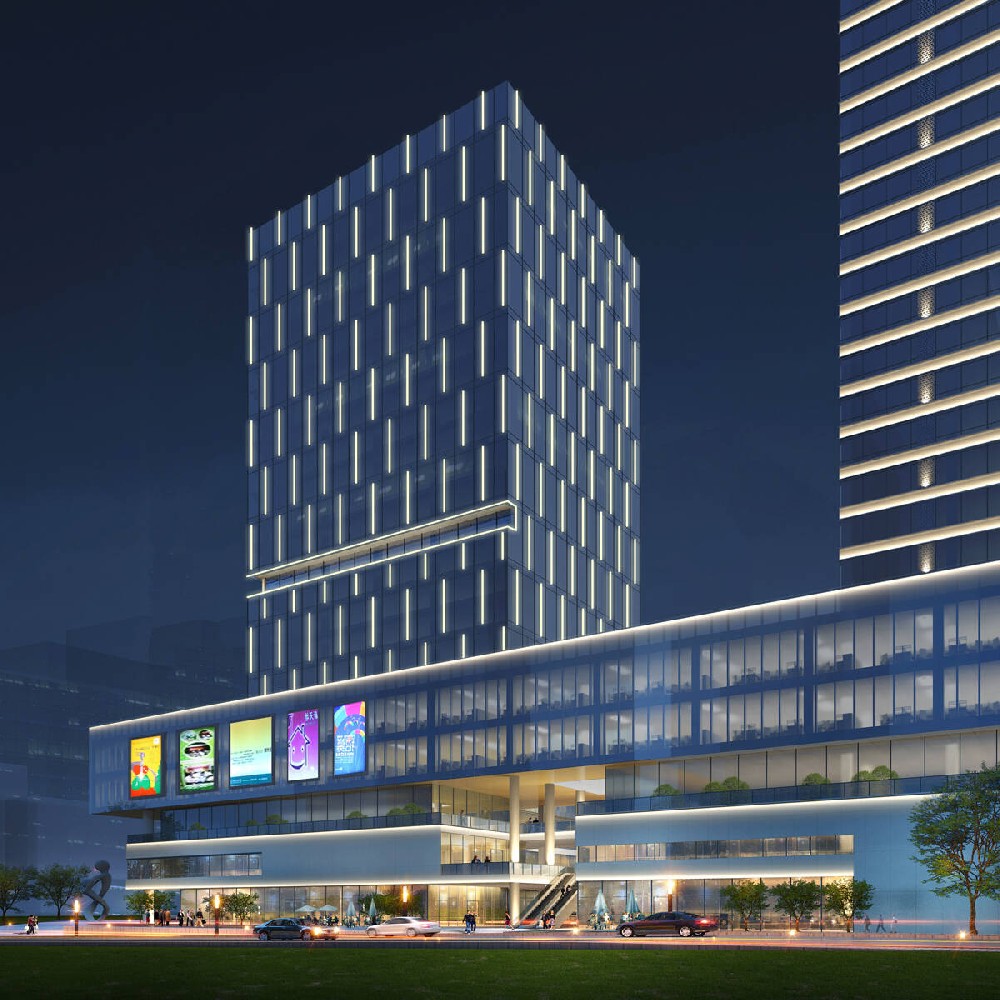
6. Background lighting
This is a method of using lighting to distinguish the illuminated building from its background, keeping the building dark and creating a clearly outlined image on the background.
7. Functional lighting
It refers to the use of indoor and outdoor functional lighting, such as indoor lights, advertising signs, window lights, street lights, etc., to decorate the outdoor night scene.
8. Nightscape lighting
It is a lighting method that integrates nightscape lighting sources or fixtures with the architectural structures of walls, columns, eaves, windows, corners, or roof sections of building facades, and is designed and constructed synchronously with the main building.
9. Multi-dimensional spatial stereo lighting
Also known as light show lighting, it is a lighting approach that starts from the spatial facade environment of a building or a cluster of buildings, combines the use of diverse lighting methods, and achieves corresponding effects through moderate changes in brightness, clear contours, and shadows, fully showcasing its three-dimensional features and cultural and artistic connotations. It can be combined with the cultural customs and architectural characteristics of the city where the buildings are located, featuring characters and the like.