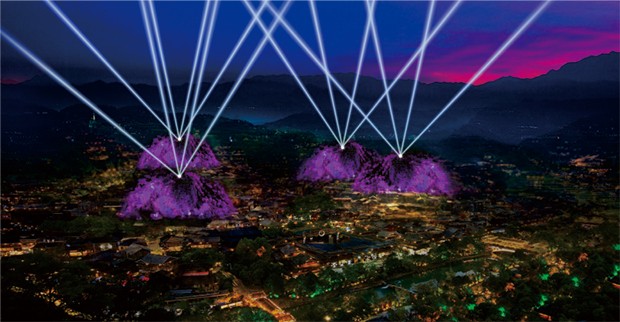
As a component of urban lighting projects, architectural lighting not only beautifies the city's night sky but also enhances the image of the building itself. It achieves the effects of self-promotion, cultural expression, and increasing visibility, and can even turn a building into a landmark. So, what issues should be considered in architectural lighting projects?
1. Overall effect
When considering the facade of a storefront, it's important not to limit the scope to just one building or a few facades involved. Instead, one must consider the continuity between buildings and storefronts along the street, as well as their overall effect, in order to create a harmonious atmosphere. The overall effect is manifested through commonality, requiring architectural coordination. If there is no coordination between two adjacent buildings on a street, it can create a cluttered impression.
II. Hierarchical sense
Layering refers to the relationship between the main scenery and the supporting scenery in architectural space. The creation of layering can be reflected through various techniques such as the use of void and solid, light and dark, light and heavy, and the use of large areas of light to outline the contours. It is necessary to consider the specific analysis of the shape and structure of the building itself, which varies depending on the scenery. At the same time, the spatial relationship of the building should also be considered to make it more scientific and artistically appealing.
III. Highlighting key points
While ensuring the overall effect of the building, architectural lighting engineering should clearly showcase the key structural and decorative details of the building as much as possible.
4. Use colored light with caution
Colored light generally carries strong emotional characteristics and can intensify certain emotions. Therefore, the use of colored light in architectural lighting projects should be based on the function, usage requirements, and surface materials of the building. It is important not to blindly pursue color effects and ignore the functional use of the building.
5. Concealment
In architectural lighting engineering, it is essential to conceal lighting fixtures as much as possible. For surface-mounted lighting fixtures, their color should harmonize with the environment, without disrupting the daytime landscape of residential buildings. The goal is to achieve a seamless integration of lighting equipment with the existing architecture, where the light is visible but the fixtures are not.
VI. Energy conservation
Building lighting projects consume a significant amount of electric energy. To conserve power, in addition to using efficient lighting fixtures, hierarchical control is anticipated during the planning process.
The above content is sourced from the internet. If there is any infringement, please contact us for removal.